
The Brutal Truth About Job Searching in 2026 Recruiter Tips
Written by Bijal , Founder of Exponential Consultants
Job Serarching in 2026? Stop Waiting, Start Winning
If you are job searching in 2026, here’s a statistic that should wake up every professional: 73% of the global workforce consists of passive candidates who aren’t actively seeking new job opportunities, yet 87% of them are always open to considering better offers without even having an ATS Friends Resume when approached. Its just that they feel they don’t need to search and jobs will come and fall in their lap
Meanwhile, the remaining 30% who identify as “active job seekers” are desperately competing for attention in an increasingly crowded and competitive marketplace where job openings now exceed available talent in major economies. Now a days, experience is not as considered as it used to be earlier, now, companies focus more on cost cutting and cost effectiveness.
But here’s what separates successful career transitions from endless waiting: hiring doesn’t happen for intent, it happens for readiness.
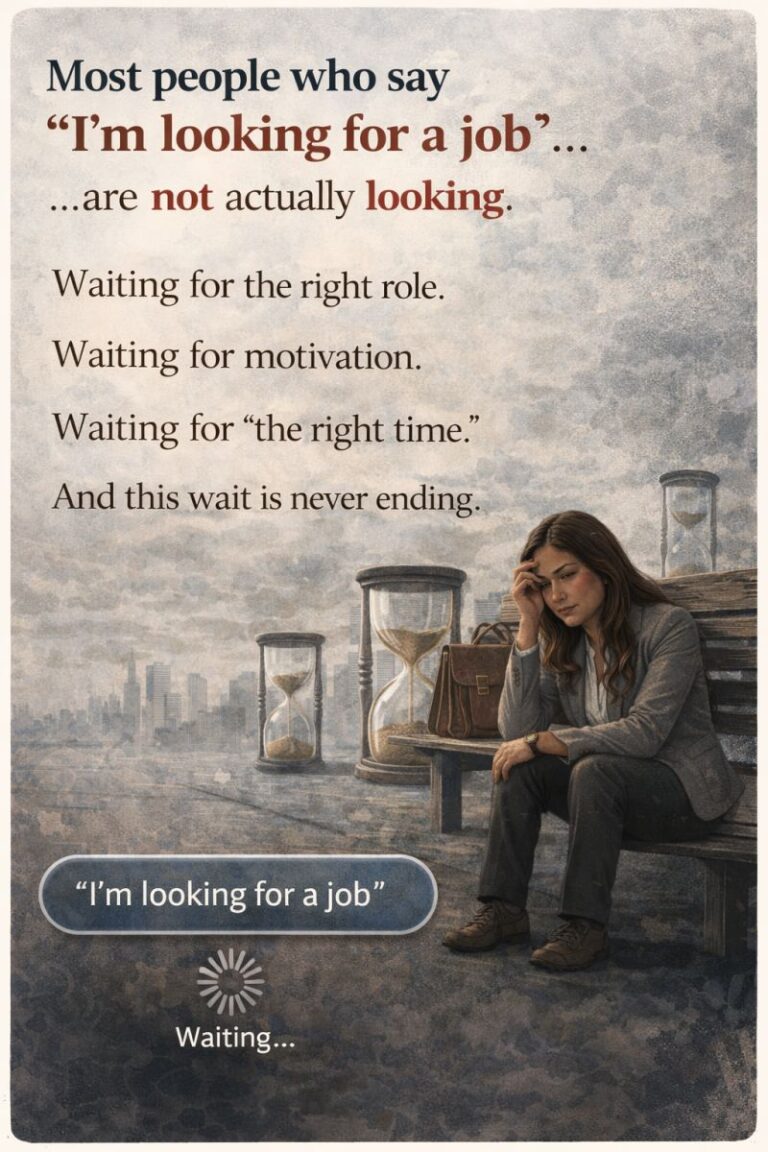
Most professionals who claim “I’m looking for a job” aren’t actually executing a strategic job search strategy and choosing the easiest but most ineffective approach. They’re engaging in what career experts call passive job searching, i.e. browsing job boards occasionally, updating their LinkedIn profile once a year, and waiting for the perfect opportunity to magically appear. This approach is fundamentally broken in today’s skills-based hiring economy where employers prioritize demonstrated capabilities over credentials alone
The Five Fatal Flaws of Passive Job Seekers
1. Outdated or Generic CVs in an ATS-Driven World
In 2026, Applicant Tracking Systems (ATS) filter over 75% of resumes before human eyes ever see them. Yet most job seekers still use outdated resume formats that prioritize duties over achievements.
After consulting with hundreds of professionals through Exponential Consultants, I’ve identified five critical gaps that destroy job search success rates: The modern job market demands skills-based resumes that highlight specific competencies, particularly data literacy, project management, and cross-functional collaboration, which now appear across every industry from finance to customer support
2. LinkedIn Profiles That Don’t Reflect Real Capability
Your LinkedIn profile is your digital first impression, yet 95% of recruiters use LinkedIn to source passive candidates
. Product managers need Jira, SQL, and Figma visibility. Sales professionals must showcase Salesforce and Sales Navigator expertise.
3. Zero Clarity on Target Roles and Career Trajectory
Skills-based hiring has fundamentally changed how employers evaluate candidates. With bachelor’s degree requirements dropping from 40% to 32.6% of job postings between 2022 and 2025, your ability to demonstrate specific, measurable capabilities matters more than your job title history.
Successful job seekers define their target role matrix—identifying 3-5 specific positions that leverage their transferable skills. They research salary benchmarks (knowing that Rust developers command $175K median salaries and AI transformation skills drive 85-110% salary premiums) and align their professional branding accordingly.
4. Interview Preparation That Stops at “Tell Me About Yourself”
The average time-to-fill for professional positions is 42 days
, meaning competition is fierce for quality roles. Yet most candidates prepare generic answers instead of developing STAR method stories (Situation, Task, Action, Result) that demonstrate quantified achievements.
In today’s AI-transformed job market, employers seek candidates who can articulate how they’ve leveraged technology to drive efficiency. Whether you’ve used ChatGPT for content automation, Tableau for data visualization, or Salesforce for pipeline optimization, these concrete examples separate prepared candidates from hopeful ones
5. Random Applications Instead of Strategic Networking
Active job search methods—directly contacting employers, utilizing recruitment agencies, and leveraging professional networks—are statistically proven to generate offers faster than passive browsing
. However, 70% of the global workforce consists of passive candidates who aren’t actively networking .
The harsh reality? 60% of job applicants don’t complete online applications due to friction and complexity
. Those who succeed treat job searching as a sales process, building relationships with hiring managers before positions are publicly posted.
The Recruiter Reality: What Actually Gets You Hired
After years in executive recruitment, I can tell you exactly what separates candidates who receive offers from those who don’t. The market has opportunities, 10.4 million job openings in the U.S. alone, but it only rewards professionals who are:
 Clear
Clear
 Clear
Clear
- The ones who define their unique value proposition.
- What specific problems do you solve?
- What technical skills (SQL, Python, Power BI) and soft skills (communication, stakeholder management) do you bring? Clarity attracts opportunity.
Prepared
Consistent
Visible
77% of passive candidates rate themselves as above-average performers, yet they remain invisible to recruiters even after lot of efforts. Publish thought leadership, engage with industry content, and optimize your profile for recruiter search algorithms.
From Passive Hope to Active Career Mastery: Your 30-Day Action Plan
Week 1: Foundation & Audit
- Conduct a LinkedIn profile audit using recruiter search filters
- Rewrite your resume using skills-based formatting with measurable achievements
- Define your target role criteria (industry, function, salary range, location flexibility)
Week 2: Strategic Positioning
- Update your LinkedIn headline with specific skills and outcomes
- Create a personal branding statement for networking conversations
- Research compensation benchmarks using 2025 salary data
Week 3: Activation & Outreach
- Implement active job search methods: recruiter outreach, alumni networks, industry events
- Schedule informational interviews with professionals in target companies
- Customize application materials for each role using job description keywords
Week 4: Interview Excellence
- Develop 5 STAR-method stories highlighting quantified achievements
- Practice AI-tool proficiency demonstrations relevant to your field
- Create a 30-60-90 day plan template for final round interviews
The Communication Imperative: Your Hidden Competitive Advantage
Here’s a final insight from 2026 job market data: Communication is now the single most dominant skill across every major job category, appearing in 71.71% of sales job postings, 63.04% of product management roles, and 52.72% of marketing positions. The better you position yourself in any skills you are looking to get hired, the better position you are to get the job so its wise to get an ATS Friendly Resume today! The second most important aspect is your network, how good you network and who you network with really builds your future.
The Choice: Ready or Waiting?
The job market of 2026 rewards action over intention so act now. With AI transformation reshaping 85% of job functions and skills-based hiring eliminating traditional barriers as now a days all companies want AI skilled employees, there’s never been a better time to make a strategic career move, but only if you’re genuinely prepared.
If you’re serious about transforming your career trajectory in 2026, it’s time to move from passive hope to active execution. The opportunities exist. The question is whether you’ll be ready when they appear.